
ATHLETE STORIES
Real athletes. Real challenges. More than just race results.
Every athlete comes to coaching with a goal.
Sometimes it’s a first triathlon. Sometimes it’s an Ironman, a qualification, a huge endurance challenge or a time they desperately want to beat.
Those results matter.
But when I look back at the athletes I’ve coached, some of the things I’m proudest of aren’t written on a results sheet.
It’s the swimmer who used to panic but now knows how to settle herself.
The athlete who once thought harder was always better, but now understands when to back off.
The person who used to compare themselves with everyone around them and has learnt to define success for themselves.
These are some of their stories.
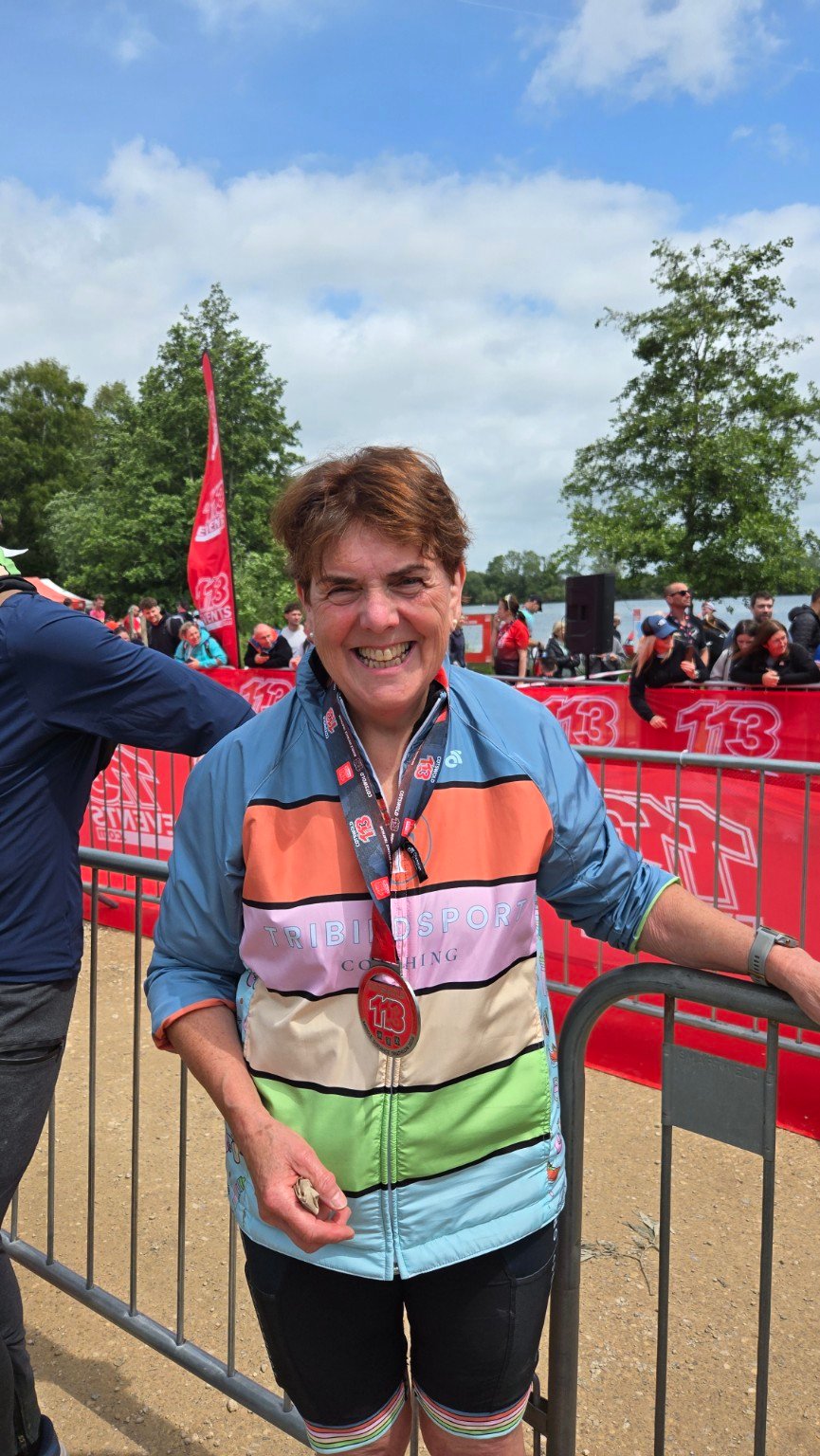
Louise — from managing the chimp to managing herself
Swimming 17 km of Windermere is a pretty intimidating prospect.
For Louise, part of the challenge wasn’t simply preparing physically for the distance. It was learning how not to mentally swim the entire thing before she’d even started.
We worked on breaking the challenge down. Staying in the moment. Focusing on what she could control. Dealing with the problem in front of her rather than worrying about everything that might happen later.
Read Louise’s full story
At Windermere, Louise swam 15 km in more than seven hours before an increasingly troublesome arm eventually brought her swim to an end.
But something important had changed.
Even when her arm started causing problems, her thinking wasn’t “this is the end.”
It was: how can I manage this?
Afterwards she told me:
“I had so many things to focus on there was no room for thinking how long I’d been swimming.”
In fact, she said the whole thing somehow felt like a Saturday morning training swim at Bray Lake.
Seven hours. Fifteen kilometres.
Just your average Saturday morning. 😂
The physical achievement was enormous. But so was the change in how Louise managed herself through it.
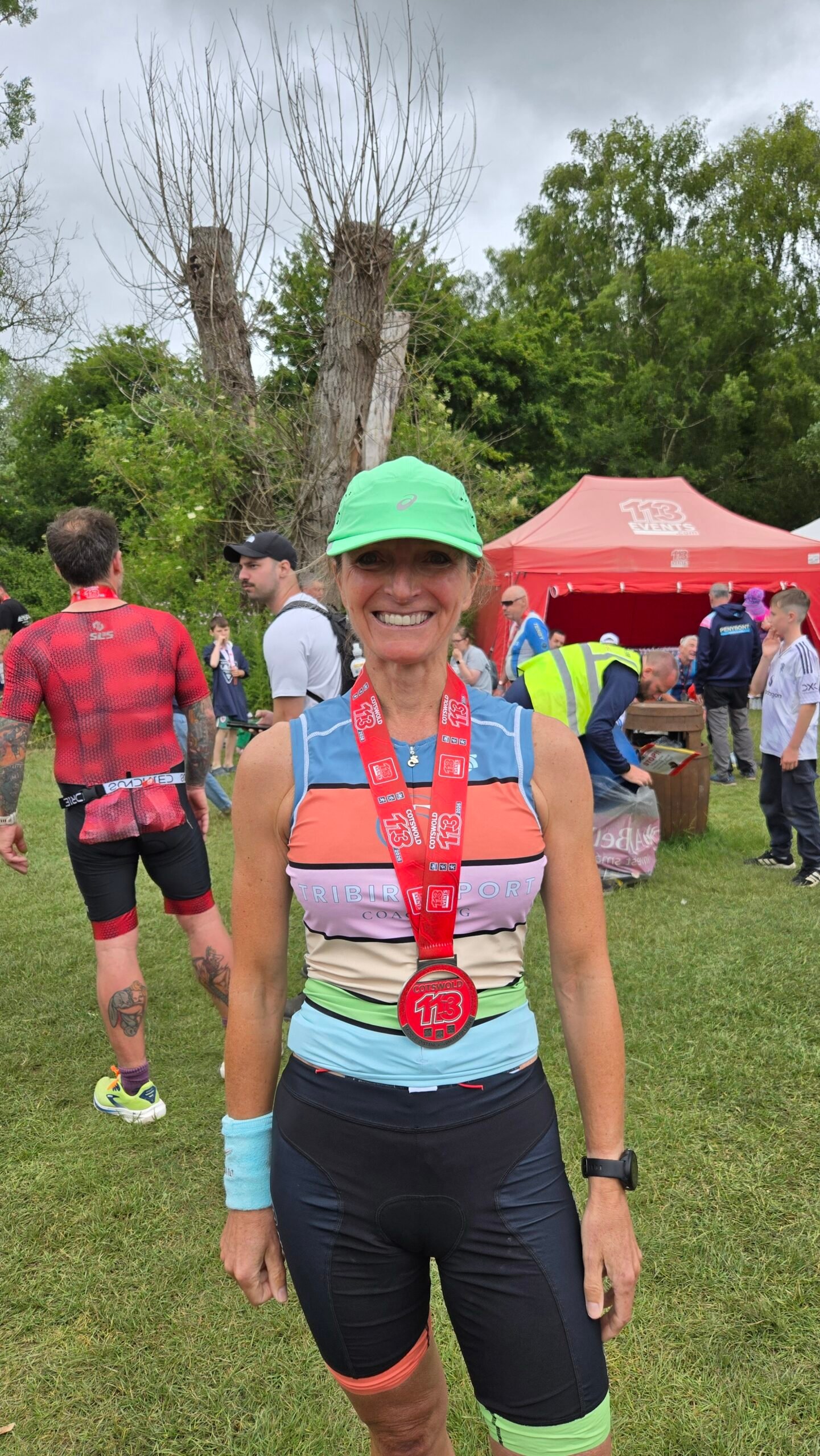
Donna — from worrying about whether she belonged to holding her own
There was a time when turning up to a swim and discovering the familiar people weren’t there could send Donna into a complete flap.
So when she arrived one morning to find herself the only woman in the session, with faster male swimmers moving into her lane, there was definitely a moment of:
Oh bloody hell.
Actually, in Donna’s words:
“Even in the warm up I was like Jesus how are they up there already…”
Read Donna’s full story
But she didn’t bail.
She didn’t turn it into evidence that she wasn’t good enough to be there.
She settled herself, swam her own swim and held her own.
Later she described it as going into “mild flap mode” rather than “total flap mode.”
Which might not appear in any recognised sports psychology textbook, but I think it’s an excellent measure of progress. 😂
Donna hasn’t suddenly stopped feeling nervous.
She’s learnt that feeling nervous doesn’t mean she can’t do it.
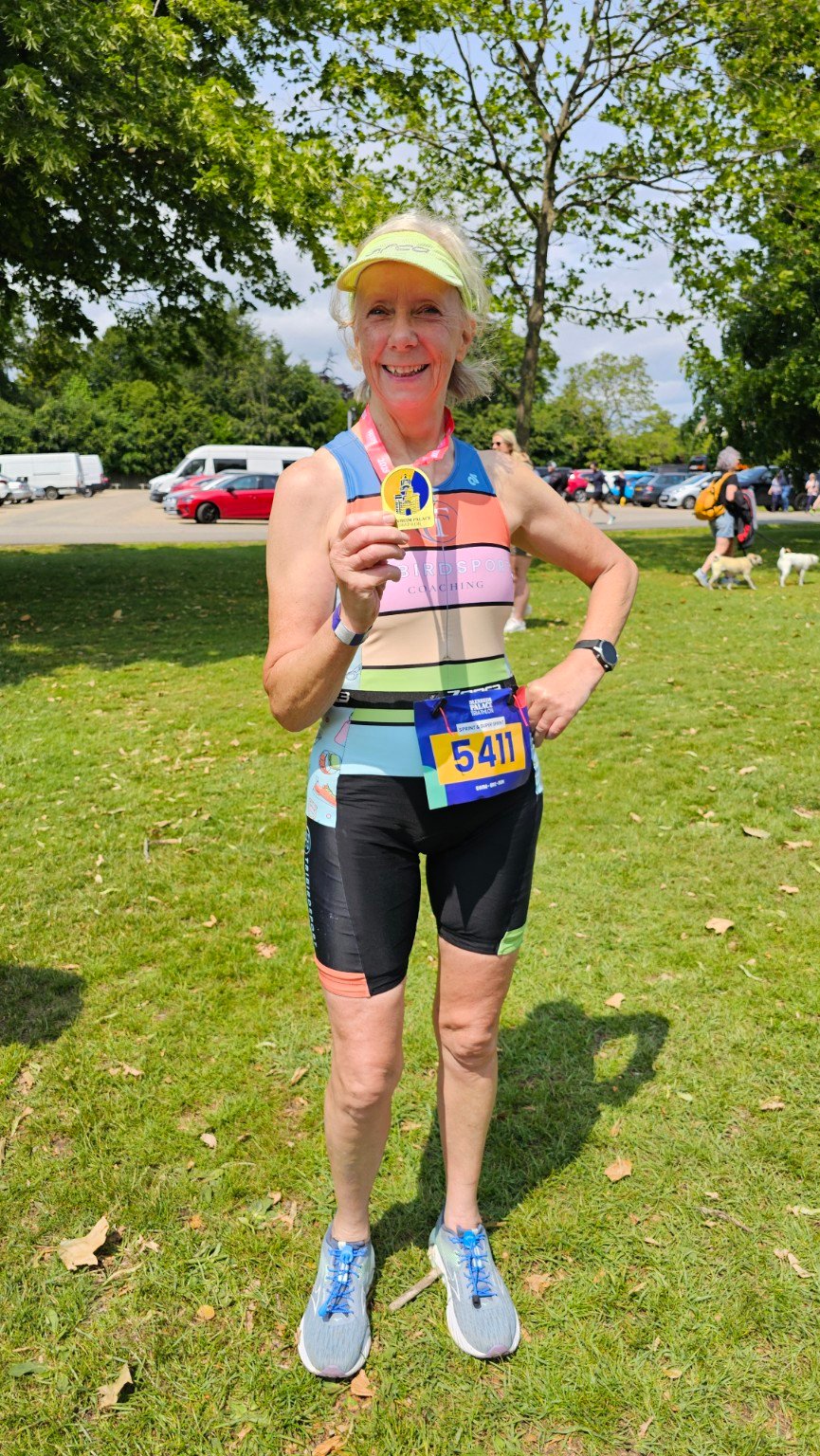
Tina — learning to define success on her own terms
Before a hilly sportive, Tina was nervous about Streatley Hill.
She’d heard plenty about how difficult it was and it would have been very easy to turn one climb into a judgement about whether she was a good enough cyclist.
Instead, we talked about riding the hills differently.
Use her own gearing. Her own cadence. Her own effort.
And if she needed to get off and walk?
So what?
Read Tina’s full story
During the sportive, Tina rode 13 of the 14 hills. She found herself overtaking other riders without going flat out and noticed she could reach the top of climbs without her breathing being completely out of control.
On Streatley itself she got just over halfway before recognising that continuing risked a fall.
So she calmly unclipped and walked.
“It’s not the end of the world, I enjoyed it.”
She’d also had to rethink her nutrition when what she’d planned to use didn’t arrive, adapted with what she had available and finished a hot, hilly sportive feeling good.
That’s what becoming a better athlete looks like to me.
Fitter and stronger, yes.
But also better at pacing, adapting, making decisions and recognising your own progress.
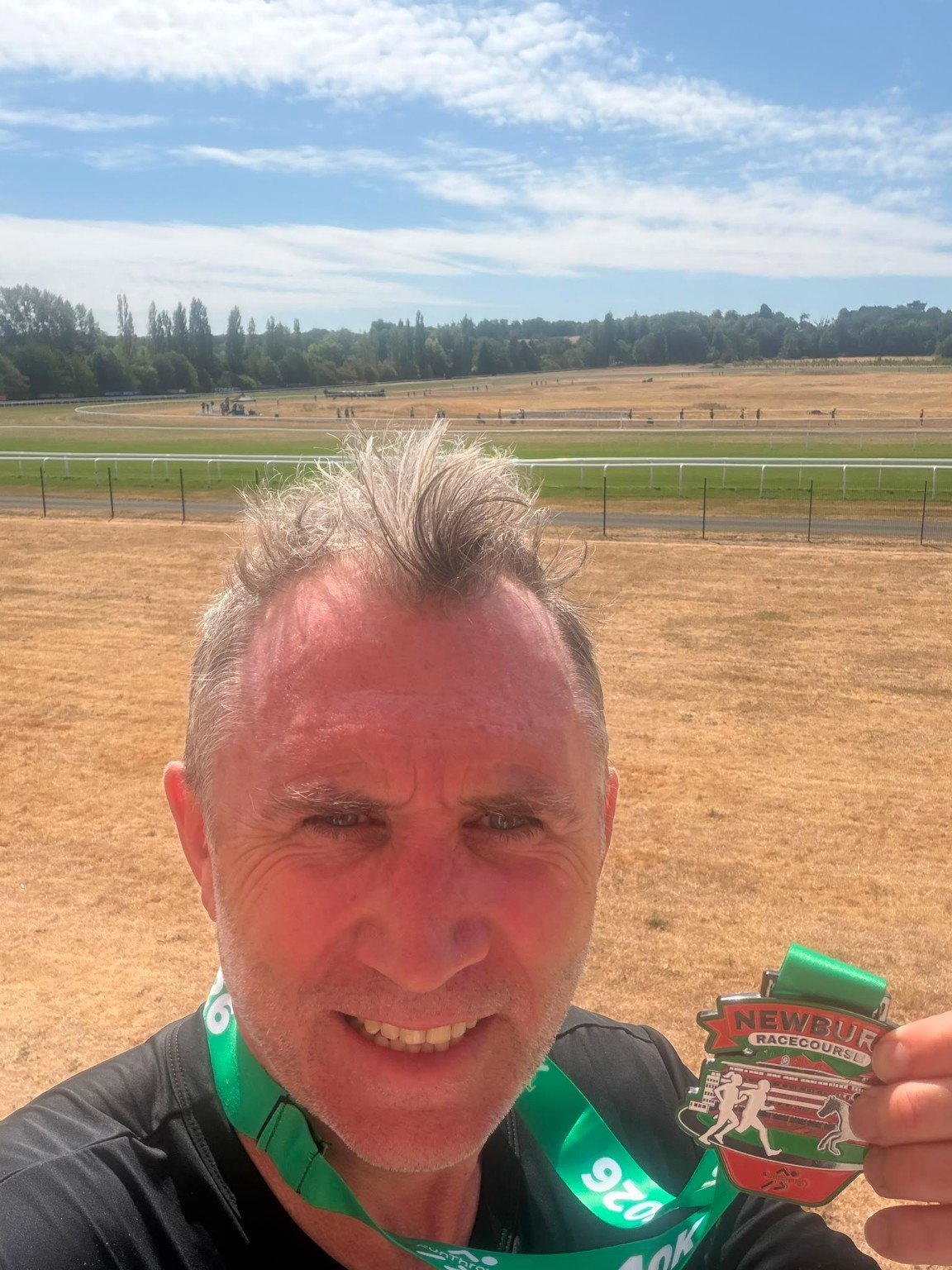
Mark — when training starts to mean something
When Mark came back to triathlon, enthusiasm was never going to be the problem.
If anything, the challenge was the opposite. 😂
Work hard. Push harder. Get the session done. If something isn’t going well, try harder still.
But over a short time we’ve worked on understanding what he’s doing, why he’s doing it and what he’s actually feeling, rather than simply judging a session by how hard he worked.
Swimming has probably shown that change better than anything.
Early on, Mark often felt as though he was fighting the water. Then the comments started changing.
Read Mark’s full story
“Something clicked tonight… I pushed because I was — dare I say it — enjoying the motion. I’M BUZZING 🥳🥳”
Then came something much bigger than swimming technique.
“Bit by bit through this process, understanding how my brain works is really liberating. God I’M so glad I made the decision to come back into triathlon, it’s giving me so much.”
And a few weeks later:
“That was the first EVER swim session I have done where there was meaning, understanding and felt like a proper structured workout.”
Followed, naturally, by:
“To add I actually ENJOYED IT, fuck me I’m bouncing.” 😂
That’s the bit I love.
Yes, Mark’s swimming is improving.
But he’s also starting to understand how he learns, why he reacts the way he does and how to approach training differently.
The sport hasn’t just given him something to get fitter at.
It’s giving him a way to understand himself.
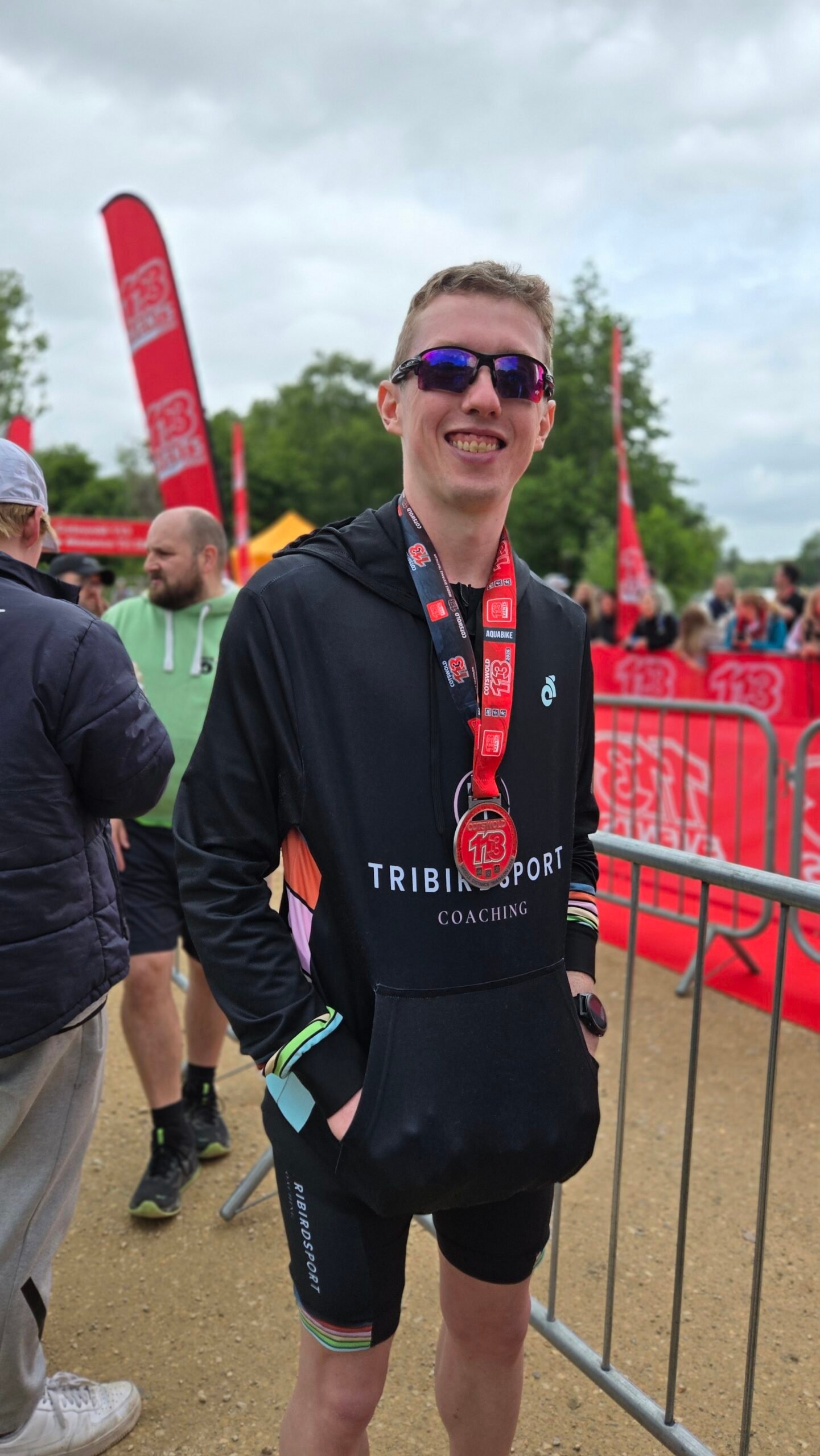
Ben — learning not to let one bad day tell the whole story
Ben’s build into Weymouth wasn’t exactly straightforward.
His bike was out of action being repaired. His calf had been causing problems. Training had been disrupted and, despite having been remarkably consistent across the year, he was increasingly worried that he’d lost the fitness he’d built.
Then, a week before the race, he had a horrible run.
“Honestly think that if I’m not already, then I’m on the cusp of burning out… the chimp is now loudly questioning the wisdom of starting next week.”
Read Ben’s full story
But that run hadn’t happened in isolation.
Ben had received some difficult personal news that day, on top of disrupted sleep and a lot of emotional stress already sitting in the background.
Rather than treating one dreadful session as evidence that months of fitness had disappeared, we put it back into context.
The training was already done. There was nothing left to prove that week.
So Ben backed off.
By Wednesday:
“Felt controlled and strong… mentally feeling a bit more up for Sunday now.”
And by Thursday:
“Feel like the chimp is continuing to retreat into his box, long may it continue.”
Then he raced.
In the swim, he stayed calm despite waves, difficult sighting and the usual chaos.
On the bike, instead of chasing everyone around him, he let the effort come to him, deliberately took the climbs easily and watched other riders hammer past uphill before struggling to recover.
He’d also learnt from previous stomach problems at Duisburg and this time his fuelling and hydration worked.
And on the run?
He started steadily, built into it and waited until around 5 km to go before really beginning to spend what he had left.
In the final few kilometres, in Ben’s words, he:
“Smashed myself to pieces.” 😂
But this time there was an important difference.
“Suffered towards the end but knew I could get there, a nice change after Mallorca.”
That’s what months of training had actually built.
Not immunity from bad sessions, setbacks, nerves or life happening at inconvenient times.
It had built enough fitness to survive disruption — and enough understanding to stop one difficult week convincing him that everything before it had disappeared.
And on race day, Ben didn’t just prove he was fit enough.
He trusted the training, paced the race in front of him and made good decisions all the way to the finish.
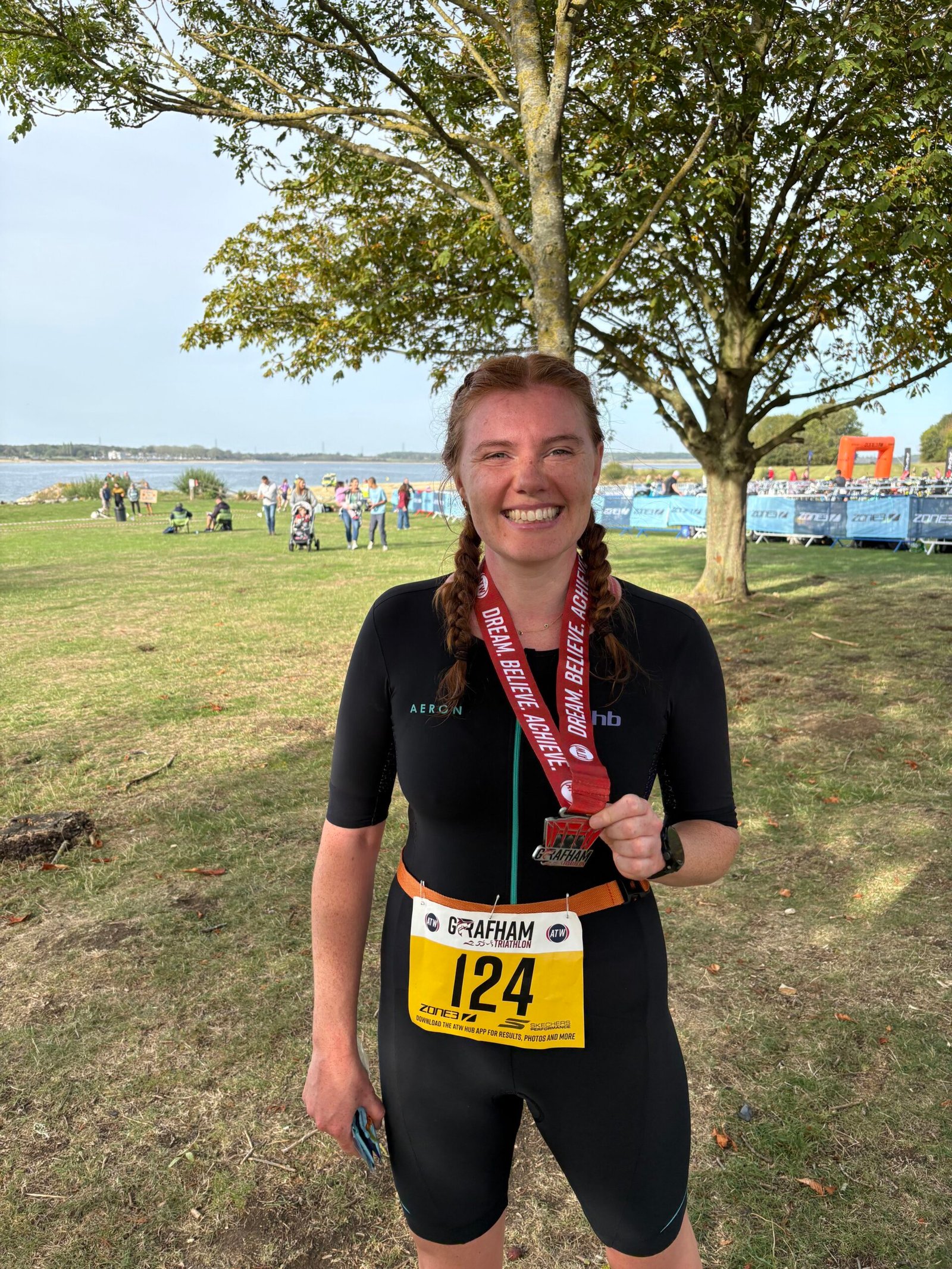
Ellie — learning to ride her own ride
The day before climbing Mont Ventoux, Ellie was already starting to question herself.
She’d ridden some tough climbs, they’d felt hard, and she’d been slower than she’d been on the same route the previous year.
Then came the inevitable comparison with the person riding beside her.
“It also didn’t help Callum asking me ‘if I was slowing down on purpose’… no, I just can’t keep up with you 🙈”
Read Ellie’s full story
But when Ellie stepped back, there was a lot more to the story.
It was hotter. She was deliberately trying to save her legs for Ventoux. We didn’t have comparable heart-rate data from the previous year. And riding slower didn’t automatically mean she was less fit.
So the plan for Ventoux became very simple:
Ride your own climb.
Start conservatively. Fuel and drink. Stop if you need to. Don’t get sucked into somebody else’s pace. And don’t turn the number of stops or the time on the clock into a judgement about whether you’d succeeded.
The next day, Ellie rode up Mont Ventoux.
And afterwards she wrote:
“Wow!! Ventoux was amazing!! This was so much fun and I’m so proud of myself.”
But the bit I particularly loved was this:
“I never was truly on the limit until the end where I could kick a little… the effort level I did made it so I really enjoyed it, could take in all the views.”
She even recognised that she probably could have pushed harder.
But she didn’t need to.
She’d paced herself well enough to manage the relentless gradients, enjoy where she was and still have something left at the top — and the following day she was back on the bike for another hilly ride.
And, because Ellie is Ellie, she’d barely finished celebrating before she was reflecting on what she’d learned:
“The limiter was really my leg strength I think… maybe that’s something for me to work on!!”
That’s the shift.
Not from being unable to climb Ventoux to being able to climb it.
From worrying about how her performance compared with somebody else’s, to managing her own effort, making her own decisions and finishing proud of the experience she’d created for herself.
She didn’t need to ride Ventoux as hard as possible to prove she could do it.
She rode it her way — and had a bloody brilliant time doing it. 😂
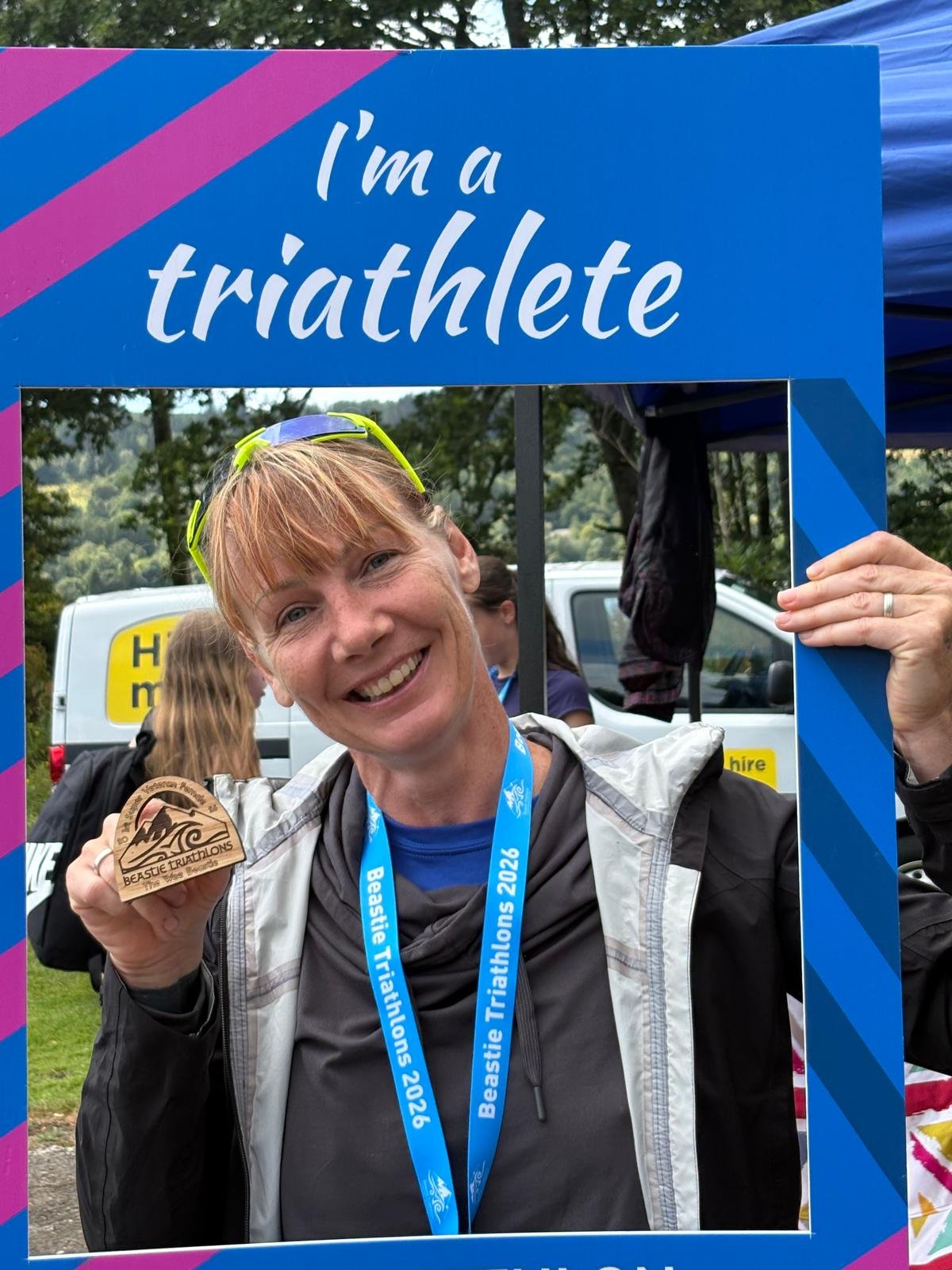
Clare — when getting to the start line is part of the achievement
There were points this year when I genuinely wasn’t sure Clare would make it to the start line of Helvellyn.
Not because she wasn’t determined enough.
Because life simply wouldn’t leave her alone.
Illness, work stress, travel, physical niggles and one interruption after another meant the consistent preparation we’d ideally have wanted just wasn’t possible.
Looking back afterwards, Clare described the year perfectly:
“I was more curved. I was a circle.” 😂
By the time Helvellyn arrived, we weren’t pretending she’d had the perfect build.
Clare knew it too:
“This is not how I would want to be on the start line. There’s a lot that’s going to have to go right.”
Read Clare’s full story
So success couldn’t be about racing somebody else’s race.
It had to be about managing the athlete, fitness and circumstances she actually had.
And bloody hell, did Helvellyn test that.
Cold and rain on the bike. Huge climbs. Walking sections of The Struggle because continuing to ride would have cost too much. Tired legs heading onto the mountain. Cut-offs getting increasingly close.
At one point Clare realised she needed to make a decision:
“Ditch the ego.”
That might be the most important thing she did all day.
She walked when walking was the sensible choice. Ate. Drank. Broke the course into manageable targets. Used what she’d learned from her recce. And when she needed to move to make the next cut-off, she moved.
She reached one checkpoint with four minutes to spare.
Other athletes were turning back.
Clare kept going.
Eventually, after getting over Striding Edge, something changed.
She knew she was going to finish.
And after everything that year had thrown at her, she did.
“Mentally, this was fucking massive… I genuinely didn’t know if I was going to be able to do it.”
But I think the bigger transformation became clear afterwards.
Clare talked about how she’d finally stopped fighting the reality of her life. If work meant a session couldn’t happen, it wasn’t automatically a disaster. We’d decide whether it needed moving, shortening or simply letting go.
As she put it:
“I kind of got there in that I stopped fighting it.”
And perhaps the best summary of the whole year came from Clare herself:
“The biggest positive was… the acceptance of, ‘This isn’t about an ego.’”
Helvellyn wasn’t impressive because Clare executed a perfect training plan.
Quite the opposite.
It was impressive because the perfect plan became impossible — and she learnt how to adapt, make sensible decisions, drop the ego and keep moving forward anyway.
She finished Helvellyn.
But she also came away understanding something much more useful:
You don’t have to fight your life in order to be an athlete. You have to learn how to work with it.
Different athletes. Different goals. Same idea.
None of these athletes needed exactly the same thing from coaching.
And that’s rather the point.
Sometimes progress is a PB or a qualification.
Sometimes it’s swimming 15 km.
Sometimes it’s getting halfway up a bloody horrible hill and making a sensible decision.
And sometimes it’s simply noticing yourself doing something differently from the person you were six months ago.
Coaching should help you perform better.
But I also want it to help you understand yourself better, trust yourself more and become more capable of navigating whatever comes next.
What could your story look like?